How surfaces age.
How paint, metal and wood change with light, touch and cleaning.
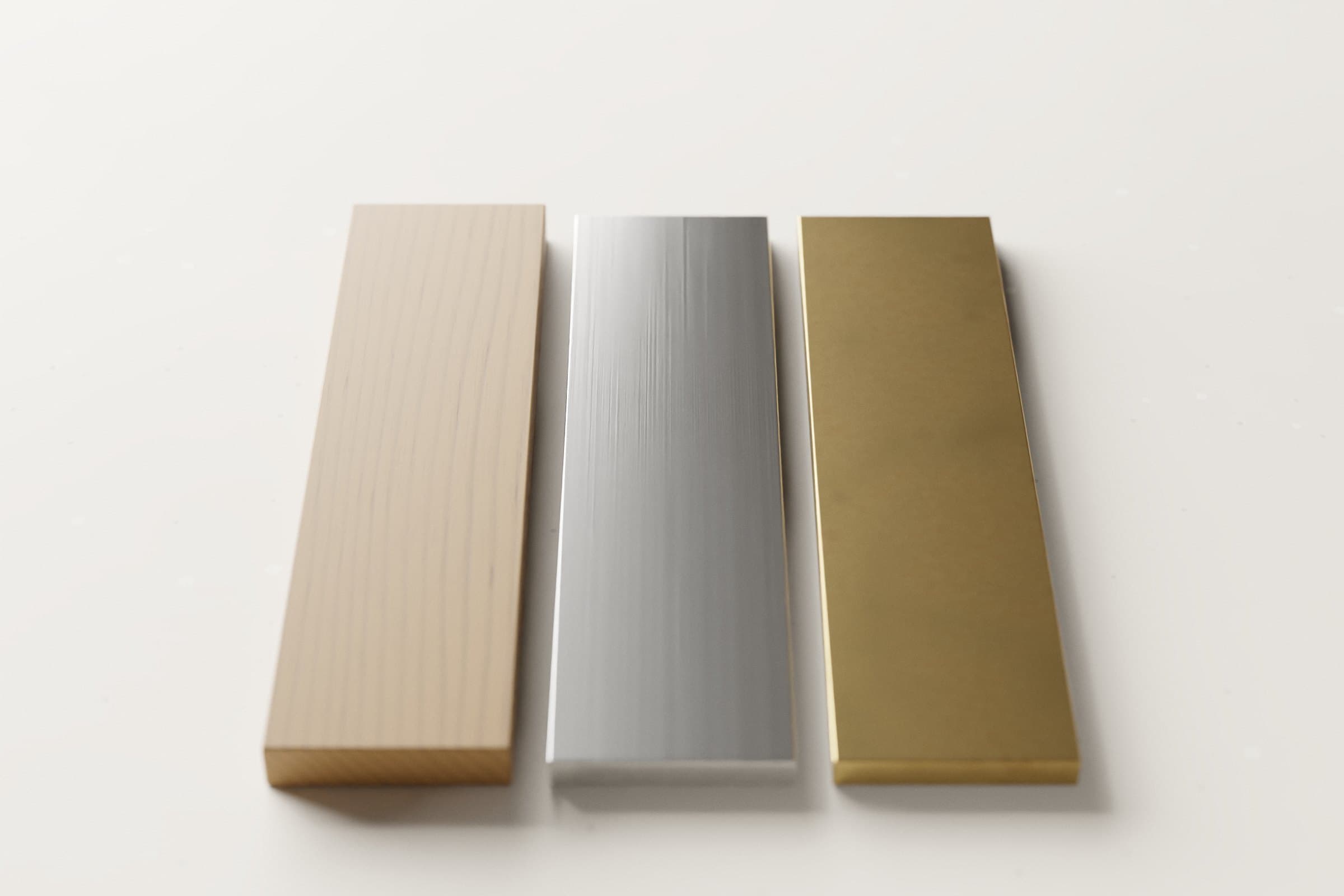
Hands, light, cleaning agents and moisture change every surface. How much depends on the material and its treatment.
Paint
Matt paints scatter light. Fingerprints and fine scratches show less on them than on high-gloss paint. Repeated rubbing in the same spot can, however, make matt paint glossy.
On sharp edges, wet paint pulls back as it dries, so the coating there is thinner than on the flat surface. That is where paint chips first. Rounded edges hold a more even coating thickness.
UV light attacks binders and pigments. Light paints can yellow and dark ones fade.
Metal
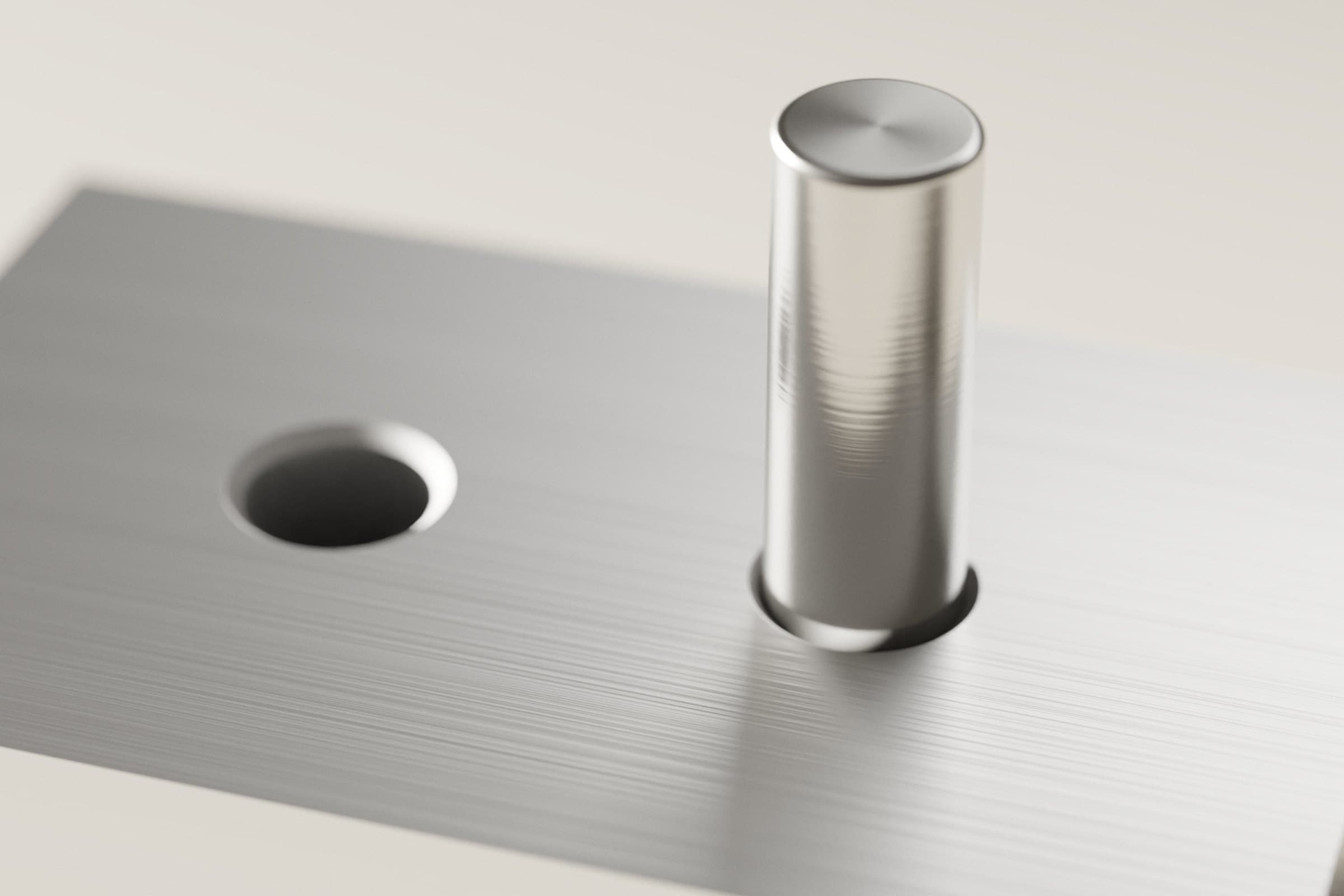
Brushed metal has fine, parallel grooves. Scratches running in the same direction blend into them. Polished surfaces show every scratch.
In air, stainless steel forms a thin chromium oxide layer that protects it against corrosion and re-forms after scratches. Its colour barely changes.
Uncoated brass reacts with air and skin contact. It darkens and forms a patina, while frequently touched areas stay brighter. Lacquered brass keeps its colour until the protective layer is damaged.
Wood
Oiled wood can be repaired locally. Scratches are lightly sanded and re-oiled, and the area blends in with its surroundings. With lacquered wood, the same repair usually means sanding and re-lacquering the whole surface.
Oak darkens under light and becomes warmer in tone. Areas that were covered stay lighter at first and even out later.